


The amazing Anna Baverstock and I have written a blog for BMJ Leader.
We have formed the start of a national network with Dr Richard Duggins looking at the organisational drivers of burnout and the changes needed to support senior doctors in the NHS in the UK.
Can we think about how we support and engage clinicians in a manner that can lead to increased productivity?
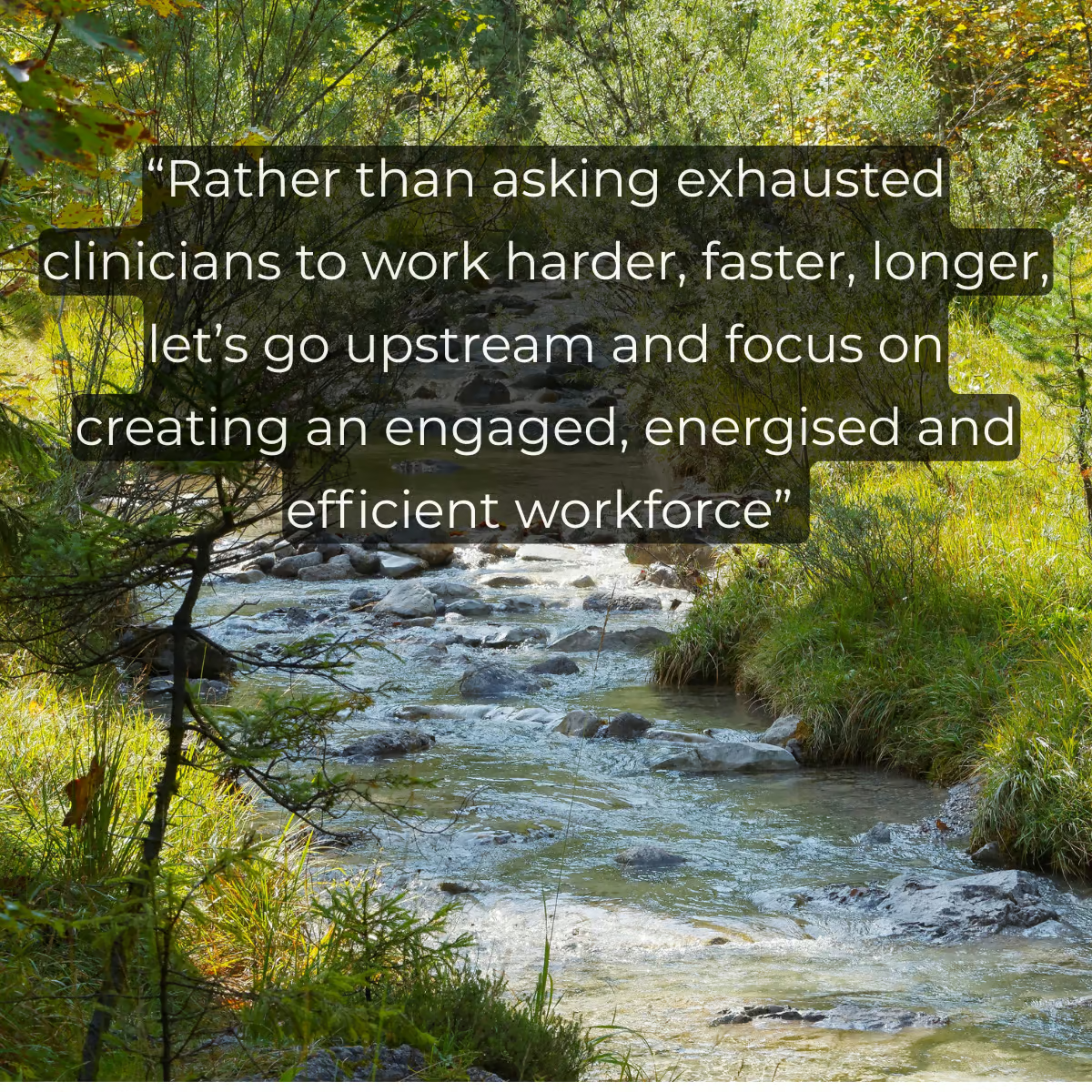
Rather than a short term, downstream approach of asking already exhausted clinicians to work harder, faster, longer, what if we took an upstream focus by supporting and engaging clinicians first to enable them to thrive and flourish?
We believe that such an ‘upstream’ focus on increasing the proportion of engaged doctors will ultimately deliver sustainably higher levels of productivity, quality and safety.
Such an approach recognises the power of an engaged workforce. Rather than a transactional model of engagement seen as an action (engagement is something done to a workforce by seeking their views), we think of being engaged as a state of being.
To be engaged is the opposite of to be burned out. Considering the three domains of burnout, we can therefore describe the opposite three states, of being engaged:
*The emotional exhaustion of burnout is replaced by a state of high energy, vitality, enthusiasm and motivation
*Disconnection, cynicism and dissociation are replaced by a state of absorption and connection with meaning and values
*A low sense of efficacy is replaced by a sense of accomplishment and higher purpose
We describe how clinical leaders can embed this approach, leading with kindness, focusing on the drivers that support us to be engaged, removing the frustrations, the pebbles in our shoes that erode energy and allowing us to thrive in our working lives. This is the key to improving productivity.